
What happens during oral surgery for a dental implant
By Kai Ramos · Updated 2026-07-16
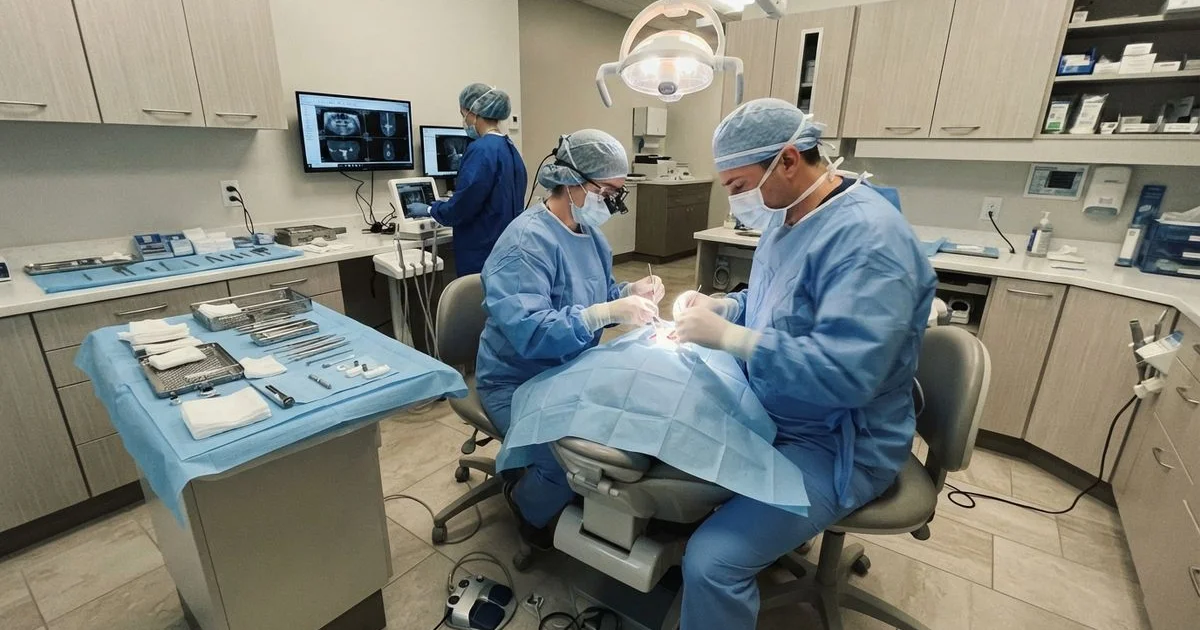
Not knowing what actually happens during implant surgery is often scarier than the procedure itself. Here’s a clear walkthrough of a standard implant placement visit, from arrival through the first few days of recovery, so there’s nothing left to guess. Oral and maxillofacial specialists who handle this kind of surgical placement in the Greenville area are listed in our oral surgery category.
Before surgery starts
Your surgeon reviews your imaging and treatment plan one more time, confirms your health history and any medications, and discusses your anesthesia or sedation plan. If you’re having sedation beyond local anesthetic, you’ll typically need someone to drive you home afterward.
Most offices ask you to arrive a bit early for this final review, and some request that you avoid eating for a set number of hours beforehand if sedation is involved, similar to the instructions given before other outpatient procedures. Bringing a current medication list, even if you’ve already discussed it at a prior visit, helps avoid last-minute delays.
The surgical visit, step by step
| Step | What happens |
|---|---|
| Anesthesia | Local anesthetic at minimum, with optional sedation |
| Site preparation | The gum is opened, and if a tooth needs removing first, it’s extracted |
| Drilling the implant site | A precise pilot hole is prepared in the jawbone, guided by your imaging |
| Implant placement | The titanium post is placed into the prepared site |
| Healing cap or temporary crown | A cover is placed to protect the site during initial healing, or a temporary crown in immediate-load cases |
| Closing and aftercare review | Sutures if needed, and detailed instructions for the next few days |
Most single-implant procedures fall in the 30 to 90 minute range. Multiple implants, extractions, or grafting in the same visit extend that.
What you’ll feel during the procedure
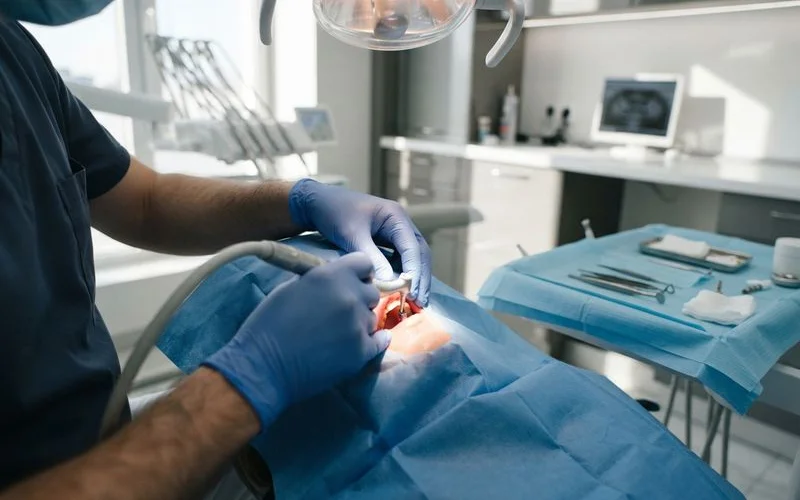
Pressure and vibration are the most commonly described sensations, not sharp pain, since the area is numbed throughout. If you feel genuine pain during the procedure, tell your surgeon immediately so they can add more anesthetic. That’s a normal request, not an inconvenience.
Some patients are surprised by how little they actually notice once the anesthetic takes hold, since the sounds of dental instruments tend to feel more intense than the physical sensations they produce. If added sedation is part of your plan, many patients recall very little of the procedure itself, sometimes only the moments right before and after.
The first few days after
Expect mild to moderate swelling and soreness, generally peaking around day two or three before improving. Ice packs during the first 24 hours, a soft-food diet for about a week, and taking any prescribed medication as directed all help keep recovery on track. Most people return to normal daily activities within a few days, though strenuous exercise is usually held off longer.
What comes after the surgical visit
The implant needs time to fuse with the surrounding bone, a process that typically takes three to six months even though surface healing is much faster. During that window, you’ll likely have one or more follow-up visits so your surgeon can confirm everything is integrating as expected before the final crown or restoration is made.
It’s easy to assume the hard part is over once the soreness fades, but this healing window is exactly why skipping follow-up appointments is one of the more common ways a case runs into trouble later. An implant that looks and feels fine on the surface can still be integrating poorly underneath, which only imaging at a follow-up visit will catch.
Questions worth asking before your surgical visit
- What anesthesia or sedation option fits my specific case?
- How long should I expect the procedure and recovery to take?
- What should I do differently if I’m on blood thinners or have a condition like diabetes?
- How many follow-up visits are built into my healing timeline?
This is general information about a standard surgical procedure, not medical advice. Your own experience depends on your specific case, health history, and the complexity of your treatment plan.
For more on choosing a local provider, see our methodology page, and browse other implant categories from the home page.
Frequently asked questions
- How long does implant placement surgery take?
- A single implant typically takes 30 to 90 minutes. More complex cases, involving extractions, grafting, or multiple implants, take longer.
- Will I be awake during the procedure?
- Usually, yes, under local anesthetic, with the option of added sedation for anxiety or longer procedures. General anesthesia is uncommon for routine implant placement.
- Is there a lot of bleeding during surgery?
- Some bleeding is normal and managed throughout the procedure, similar to other oral surgical procedures like extractions. It's not typically extensive.
- When do I get my permanent tooth?
- After the implant fully integrates with the bone, generally three to six months later, your provider takes an impression and fits the final crown or restoration.
Related on this site
- Browse oral & maxillofacial surgery providers
- Best oral & maxillofacial surgery in Greenville, SC →
- Told you need a bone graft or sinus lift before implants? Here's what that means
- Same-day dental implants: what to expect from the appointment
- Periodontist, prosthodontist, or general dentist: who should handle your implant?
- All guides →