
Is dental implant surgery safe? Pain, risks, and recovery explained
By Kai Ramos · Updated 2026-06-18
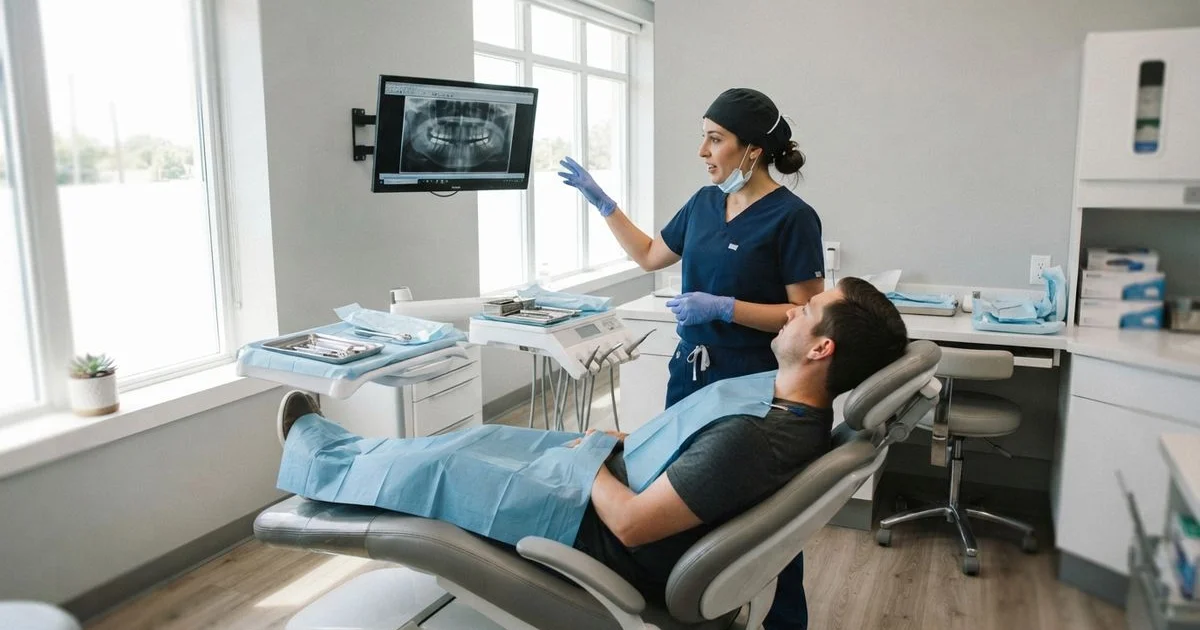
Implant surgery sounds more intimidating than it usually feels in practice, and the gap between what people expect and what actually happens is one of the biggest reasons patients put off treatment they’d otherwise benefit from. Here’s a straightforward look at what the procedure involves, what genuinely goes wrong on occasion, and what a normal recovery looks like, without softening the parts that matter or overstating the parts that don’t.
What the procedure actually involves
At its core, an implant is a small titanium post placed into the jawbone to act as an artificial tooth root, topped eventually with a crown. Placement happens under local anesthetic, sometimes with added sedation for anxiety or longer procedures. Most single-implant placements take well under an hour of actual surgical time.
Patient feedback across the Greenville area consistently mentions gentle technique and a more comfortable experience than expected as one of the more common praise points, which lines up with how the procedure is typically described clinically: uncomfortable in the sense of pressure and vibration, but not the sharp pain people sometimes brace for.
A lot of the anxiety around implant surgery comes from comparing it, mentally, to a much bigger operation than it actually is. For most single-implant cases, the surgical time itself is closer to a tooth extraction than anything resembling major surgery, and it’s performed in a standard dental chair rather than an operating room.
The real risks, honestly
| Risk | How common | What reduces it |
|---|---|---|
| Infection at the surgical site | Uncommon | Following aftercare instructions, antibiotics if prescribed |
| Implant failing to fuse with bone | Uncommon | Adequate bone volume confirmed by imaging beforehand |
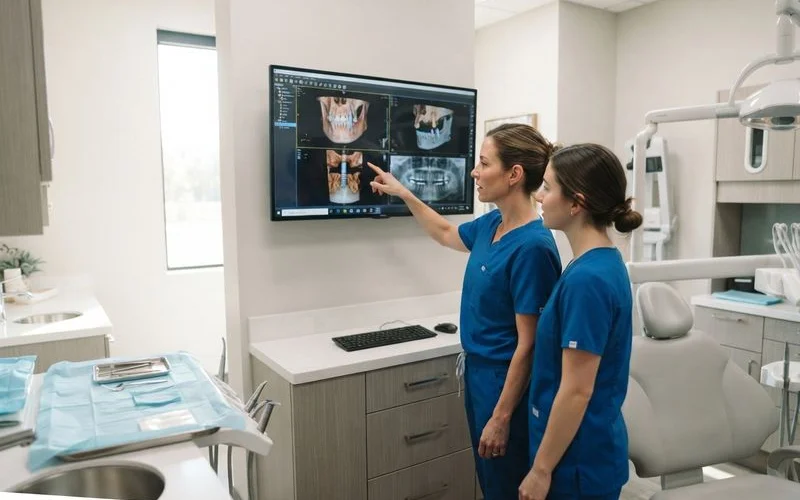
| Nerve or sinus involvement | Rare, location-dependent | 3D imaging to map anatomy before placement |
| Prolonged healing in smokers or uncontrolled diabetics | More likely in these groups specifically | Managing the underlying condition, sometimes delaying surgery |
None of these are reasons to assume something will go wrong. They’re reasons a thorough consultation, including real imaging rather than a visual exam alone, matters before you schedule surgery.
What recovery actually feels like
The first two to four days typically bring mild swelling and soreness, managed with over-the-counter pain relief for most patients, occasionally something stronger for more involved cases. A soft-food diet for the first week protects the surgical site while it starts to heal. Most people are back to normal routines within a few days, though strenuous exercise is usually held off for a bit longer.
The part that surprises people is that feeling fine doesn’t mean the implant is done healing. Osseointegration, the process where bone fuses to the implant, takes three to six months even though the surgical soreness itself resolves in days. That’s why the temporary crown or healing cap stays in place for months before the final restoration goes on.
When to actually worry
Contact your provider if you notice increasing pain or swelling after the first few days rather than gradual improvement, a fever, or the implant feeling loose. These aren’t common, but they’re the signs that something needs a look rather than more time.
Waiting to see if a genuine warning sign resolves on its own is the one habit worth avoiding here. Catching an issue early, whether it’s an infection or an implant that isn’t integrating properly, is almost always simpler to address than one that’s had weeks to progress. If you’re wondering what an actual complication looks like well after the initial healing window, our guide to warning signs a dental implant may be failing walks through the signs worth watching for.
This is general information, not medical advice. Whether implant surgery is appropriate and safe for you depends on your own health history and an in-person exam, which only your provider can assess. A thorough consultation beforehand, including a full review of your medications and any chronic conditions, is what turns general safety information like this into a plan specific to you.
If you’re deciding where to start, our home page links to categories for every type of implant procedure, and our methodology page explains how we evaluate local providers on more than star ratings alone.
Frequently asked questions
- Does getting a dental implant hurt?
- During the procedure, no, since it's done under local anesthetic at minimum. Afterward, most patients describe soreness and mild swelling for a few days, closer to a tooth extraction than a major surgery.
- What are the real risks of implant surgery?
- Infection, the implant not fusing properly to bone, and nerve or sinus involvement in certain locations are the main ones. These are uncommon but not zero, which is why a thorough exam and imaging beforehand matter.
- How long is recovery?
- Initial soreness fades within a week or two. Full integration of the implant with the bone, which is what makes it permanent, takes several months even though you feel mostly normal well before that.
- Is it safe for older adults?
- Age itself isn't usually the deciding factor, overall health and bone quality are. Many older adults are excellent candidates; some health conditions matter more than age does.